


Author Profile: Charles Dickens and the Victorian City
Charles Dickens knew London at street level, on foot, after dark. He also knew the inside of a debtors' prison and the racket of a factory floor, and those two facts explain most of what he wrote. His city is never mere scenery. It is a crowded, filthy, funny, unjust place where a child can vanish before lunchtime and a lawsuit can outlive everyone named in it. If Victorian London has a definitive portrait, he painted it — in monthly instalments, to deadline, with an argument behind it.
The City That Made Him
Dickens was born in Portsmouth in 1812 and came to London as a small boy, part of a family that was forever spending slightly more than it earned. When his father was sent to the Marshalsea, the debtors' prison in Southwark, the household came apart. Dickens, then twelve, was set to work pasting labels on bottles in a blacking factory near the Strand, lodging alone in Camden Town and walking to visit his family in prison. He later described those months as a period when he lost his childhood and very nearly his self-respect; he told almost no one about the factory while his parents lived.
That episode gave him two things he used for the rest of his life: an ear for the way respectable people talk when they are frightened of falling, and a restless sympathy for anyone at the bottom of a system. He became a solicitor's clerk, then a shorthand reporter in the courts and in Parliament — an education in jargon and evasion that shows on every page of Bleak House. By twenty-four he had published Sketches by Boz and was halfway through The Pickwick Papers. And he walked. He thought nothing of covering miles of the city after midnight, through Clerkenwell, the Borough, Covent Garden and the riverside streets, watching and remembering. He walked with police officers on night duty and turned one such expedition into a magazine article. Late in life he put the compulsion plainly:
If I could not walk far and fast, I think I should just explode and perish.
London as a Living Character
Few novelists give a city so much to do. In Dickens, the weather prosecutes. The fog and mud that open Bleak House are not atmosphere; they are a description of a legal system that has soaked everything in slime.
Fog everywhere. Fog up the river, where it flows among green aits and meadows; fog down the river, where it rolls defiled among the tiers of shipping and the waterside pollutions of a great (and dirty) city.
The Thames in Our Mutual Friend is work, money, salvage and death at once — a river you can dredge a fortune out of, or a body. The Inns of Court hide professional parasites; the marshy ground at Jacob's Island, in Bermondsey, hides Bill Sikes. In Dombey and Son, a railway cutting tears through Camden Town like an earthquake and Dickens makes the demolition feel like both a wound and a promise. He is precise about trades, too. A crossing sweeper, a dust contractor, a keeper of a rag-and-bone shop, an articulator of skeletons, a professional mourner — each arrives with the small exact detail of a man who had stood and watched. That specificity keeps the novels from sliding into mere sentiment. His London is loud, smelly and sociable, and nobody's respectability is more than two bad months from collapse.
The Reformer's Instinct
Dickens was not a theorist. He distrusted programmes and never wrote a novel to prove a scheme. What he did was attach an outrage to a story, give it a face, and let his readers grow fond of the face. Then he let them notice what the system was doing to it.
What He Was Arguing Against
- The workhouse and the 1834 Poor Law — Oliver Twist, where asking for more is a small child's crime against a system built to make poverty humiliating.
- Chancery and the law's delays — Bleak House, in which Jarndyce and Jarndyce grinds on until the estate is eaten whole by costs, and Jo the crossing sweeper dies of a disease the courts helped to keep in circulation.
- The private schools of the north — Nicholas Nickleby, written after Dickens travelled to Yorkshire to see Dotheboys Hall for himself.
- Industrial greed and the cult of facts — Hard Times, set in a soot-black Coketown where children are taught that imagination is a nuisance.
- Filth, bad water and slum housing — the campaigning journalism and the Christmas books, where cholera is not an act of God but a failure of drains and landlords.
He also knew the limits of outrage. In Little Dorrit he put his own father's prison back at the centre of the story, and the Circumlocution Office — a department devoted to never doing anything — stands beside the Marshalsea as the two great English institutions of the book.
Serial Fiction and the Shape of the City
Dickens's London is also a product of how the books were sold. Most of the novels appeared in nineteen or twenty monthly parts, thirty-two pages at a time in a green paper wrapper, with two illustrations, at a shilling. Readers queued for them, lent them on, argued about them in letters to the author, and demanded that he not kill off the characters they loved. Writing to a monthly deadline in this way taught him to end each instalment on a turn of the screw and to build a whole world out of small recurring things: a shop sign here, a man's cough there, a particular patch of mud that reappears three hundred pages later.
It also shaped his second career. From 1858 he toured Britain and America giving public readings of his own work, and the murder of Nancy from Oliver Twist became a performance so violent that doctors warned him against it. He kept doing it anyway. He was, in the modern sense, a one-man media operation, and the city he described was his audience as much as his subject.
What He Got Wrong
An honest portrait has to include the blind spots. His women tend to be angels or harpies, rarely anything as ordinary as unmanageable. Fagin traffics in the oldest anti-Semitic caricature in English fiction, a debt Dickens partly acknowledged after a Jewish reader wrote to him and he revised the text. He was suspicious of organised labour and of Chartism, and in Hard Times the union man is a windbag. His sympathy was real, but it was the sympathy of a man with strong opinions about how the poor ought to behave.
Where to Walk in His London
He is one of the few writers whose city is still traceable on foot in an afternoon.
- 48 Doughty Street, Bloomsbury — the only surviving London house he lived in, now a museum, and the place where he finished Pickwick and began Oliver Twist.
- Borough High Street, Southwark — the site of the Marshalsea, a fragment of whose wall still stands; St George the Martyr, where Little Dorrit is christened; and the galleried George Inn, which he knew and used.
- The Inns of Court and Chancery Lane — the back courts, staircases and clerks' offices that became the machinery of Bleak House.
- Narrow Street, Limehouse — the riverside, the watermen, and the pub from which the Thames in Our Mutual Friend can still be seen doing its work.
Landmarks
- 1836–37 — The Pickwick Papers makes his name and makes comedy of the coaching inns.
- 1837–39 — Oliver Twist, serialised alongside it, turns the same city into a horror story.
- 1852–53 — Bleak House, the fog, the courts and the graveyard, his finest book about the city as a system.
- 1860–61 — Great Expectations, London seen through the eyes of a boy ashamed of where he came from, which is the theme he never stopped writing.
He died in 1870, at Gad's Hill in Kent, with a half-written novel on the desk and, by then, the enormous public of a national institution. It is tempting to file him under comfort: the carols, the fireside, the comic names. But the reason the books lasted is the reason he walked those streets in the first place. He took the city seriously — its fog, its courts, its markets, its prisons, its noise — and he refused to pretend it was anybody's fault but the people in charge. That is a subject with a long shelf life.
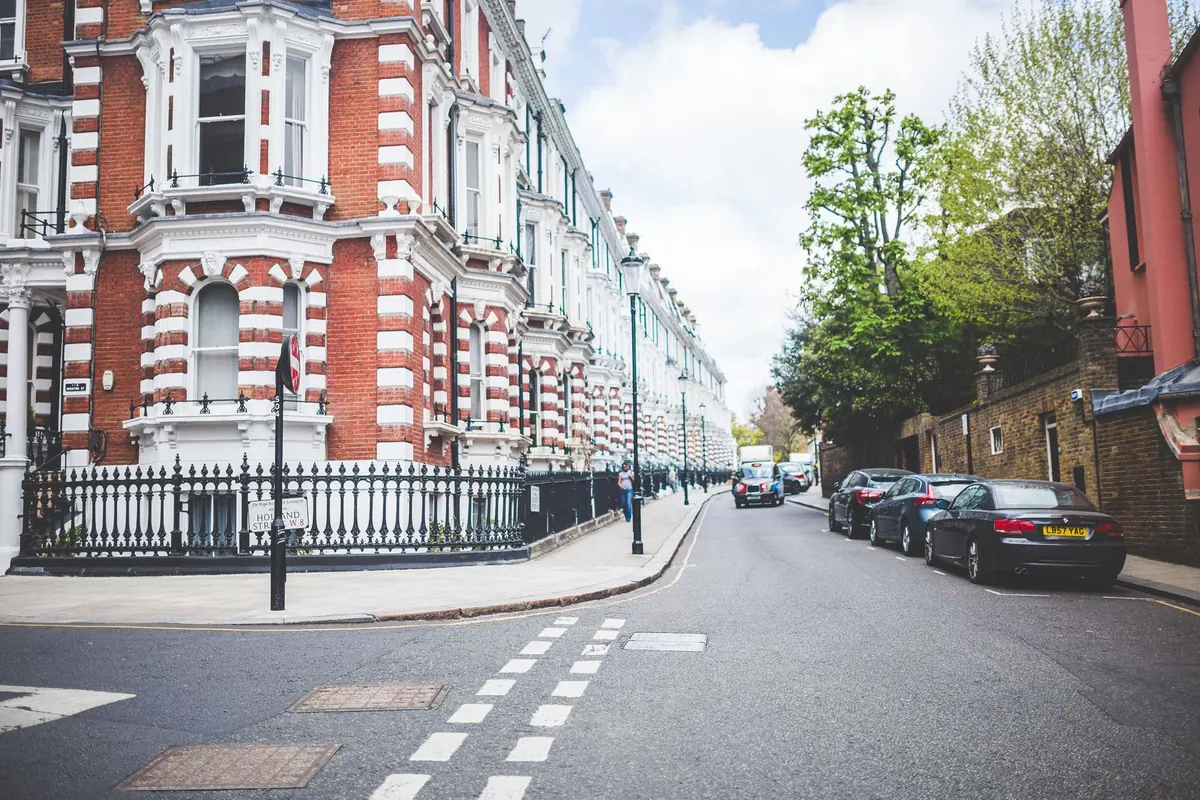
Photo: Negative Space / Pexels
Related posts
More stories you’ll love reading